
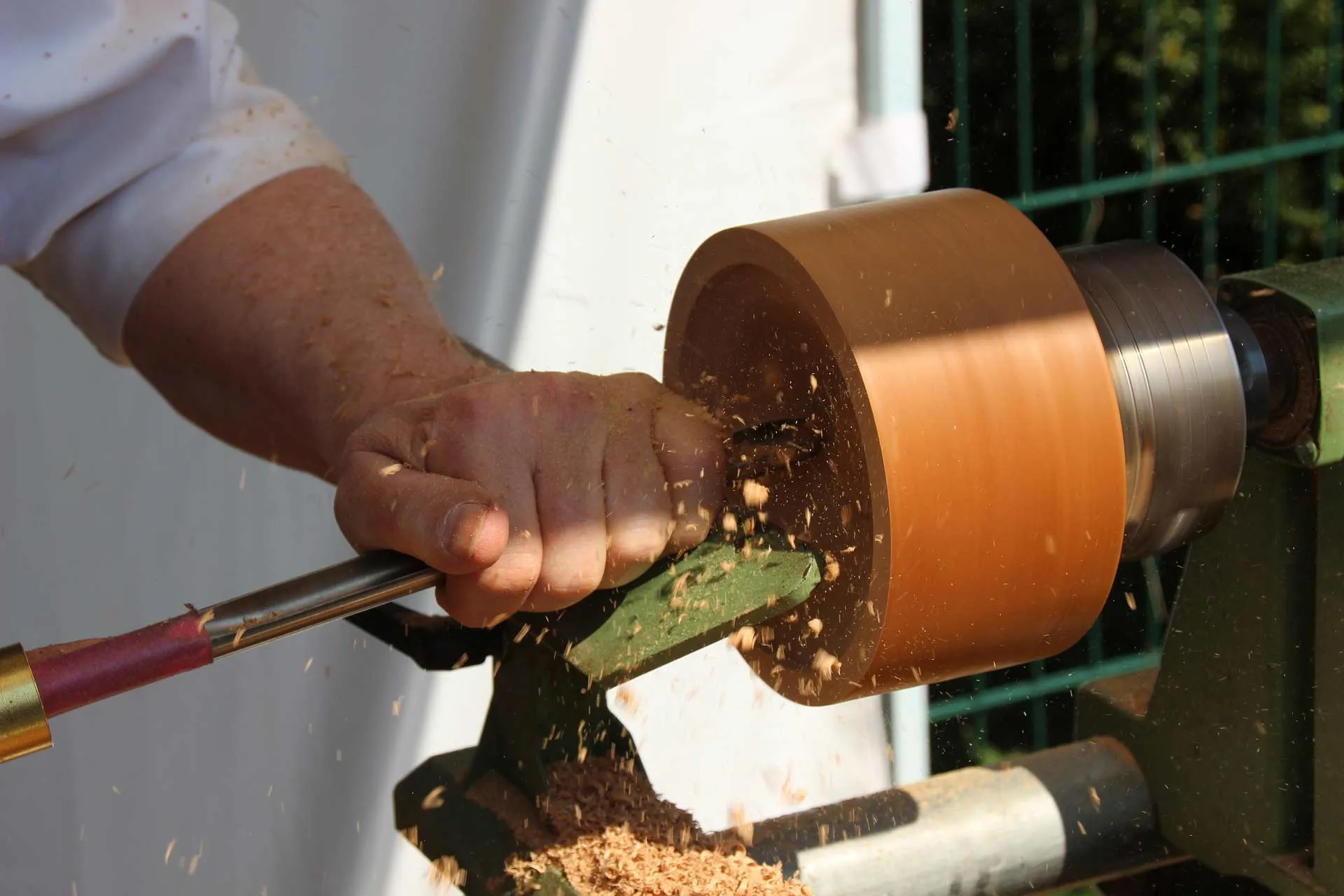
In an era of mass production and fast consumption, the image of a craftsman working at a lathe, shaping a wooden object by hand, may sound almost like a retro idyll. Yet the image you see - a hand firmly holding a turning chisel, wood spinning smoothly, and shavings flying through the air - carries a strong and timely message. It reminds us that woodworking is not just a quaint trade, but a complex synergy of technique, intuition, and aesthetics. In the following lines, we will look at why crafts such as wood carving and woodworking not only deserve respect, but also have a real place in contemporary society - economically, culturally, and environmentally.
Technique, skill, and respect for the material
The focus on the hand and the tool is no accident - a good craftsman knows the material down to the smallest detail. Different kinds of wood have different density, grain direction, and tendencies to crack; knowing how to work with them is knowledge built through years of practice. When working on a lathe, that knowledge becomes visible: the correct chisel angle, constant control of pressure and speed, and attention to vibration all determine the final result. In modern workshops, these skills combine with modern tools and methods, but hand control remains irreplaceable when seeking finesse and character.
Creativity and personalization
Woodworking is not only technology - it is a way of expression. From turned bowls and vases to complex decorative elements, each object bears the imprint of the maker’s hand. For clients, this means uniqueness: an item that is not mass-produced, but created with thought and taste. Personalized furniture and home objects are in growing demand - people want to own something with history and character that sets their interiors apart.
Training and passing on skills
Hands-on woodworking is a process that requires learning through practice. Just like any other advanced skill, training goes through observation, repetition, and correction. Workshops that invest in apprentices and trainees build resilience into the craft - new generations of masters who can preserve and develop the skills. This transfer of knowledge also has social value: it fosters discipline, precision, and respect for labor - qualities that matter far beyond the workshop itself.
Environmental and economic arguments
In the context of climate and resource crises, quality and long-lasting products make more sense than ever. Wood, when sourced sustainably and used responsibly, is a renewable resource. Handcraft often leads to greater precision and durability - furniture that can be repaired and restored instead of replaced. That means less waste and a lower environmental footprint in the long term. The economic aspect is also significant: small workshops and independent makers support local economies, create jobs, and spread skills that cannot be easily automated.
Cultural value and authenticity
Ръчните изделия носят културна памет. Традициите в дървообработването варират от регион до регион — мотиви, техники и форми, които отразяват историята и идентичността на общността. Поддържането на тези традиции чрез практика и обучение запазва културното разнообразие и осигурява връзка между миналото и съвременността. Clientите, търсещи автентичност, често се обръщат към майстори, които могат да им предложат предмети с история и смисъл.
Safety and work ethics
One of the important themes suggested by the image - even indirectly - is safety and ethics at work. Control over tools, correct technique, and protective equipment are essential elements of responsible practice. Workshops that emphasize safety training and dignified working conditions not only protect their craftsmen, but also ensure higher-quality output.
The future: synergy between tradition and innovation
The most promising path forward is the synthesis of tradition with modern technology. CNC machines, digital design, and contemporary finishes can be combined with hand-finishing and artistic sensibility, creating pieces that are both precise and unique. In this way, makers preserve the essence of the craft - attention to material and detail - while using new tools for broader reach and efficiency.
The image of the hand working at a lathe reminds us that at the heart of beautiful furniture and functional objects stands the human hand - with its precision, experience, and creativity. Woodworking is not an archaic remnant of the past, but a living and dynamic field that offers sustainable, emotionally resonant, and high-quality solutions for today’s market. By supporting local craftsmen, investing in education, and valuing handcraft, we do more than simply obtain products.