
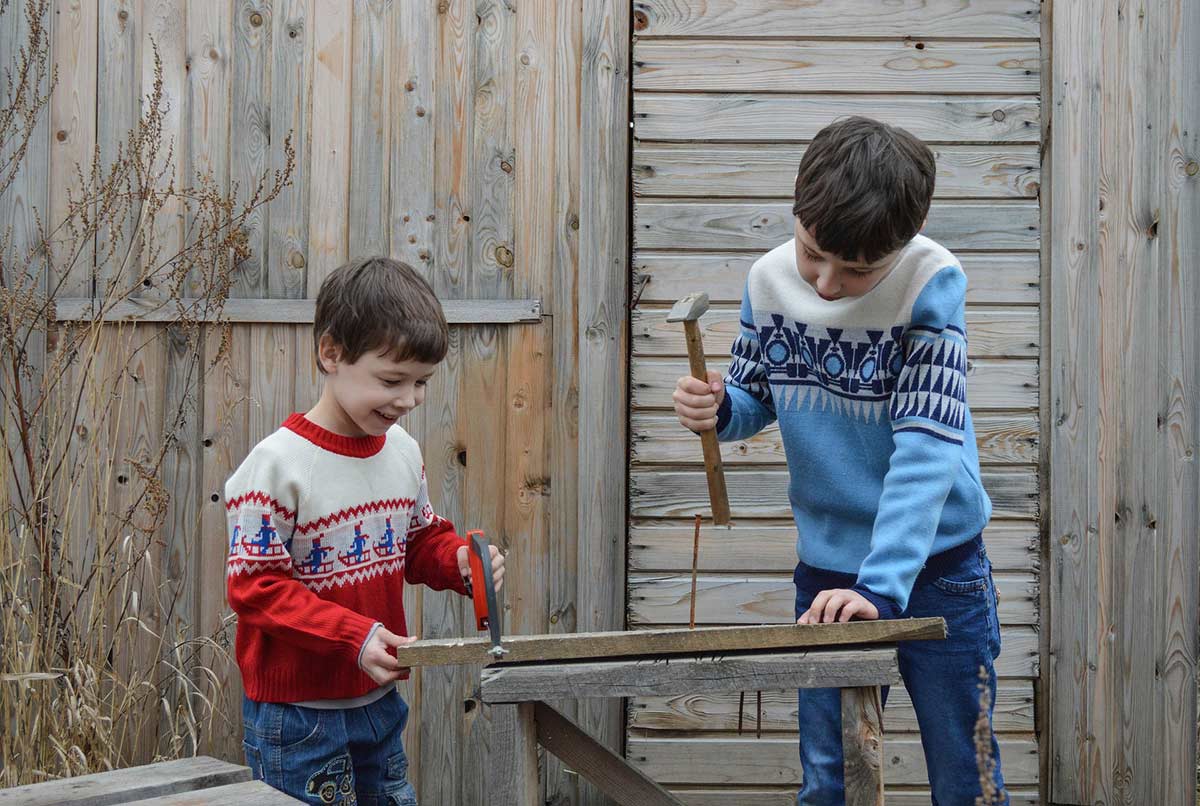
In a world where mass production dictates the rhythm of everyday life, handcrafted furniture remains an island of sustainability, humanity, and identity. A simple image - two children working with wood and basic tools - says more than endless marketing slogans. It reminds us that furniture is more than an object: it carries stories, skills, and bonds between generations. In this article, we explore how the three key values of tradition, learning, and family ties give depth and meaning to the furniture craft and why they matter to clients today.
Tradition as the foundation of quality
Carpentry has ancient roots - from simple handmade stools to richly ornamented cabinets, craftsmen have passed knowledge down from generation to generation. This continuity is not just nostalgia for the past; it is a guarantee of quality. Techniques that have survived for centuries are often the most suitable for creating durable and aesthetically refined pieces. Choosing the right species of wood, understanding how it behaves in different conditions, and knowing how to assemble without unnecessary metal fasteners are all skills born from long practice.
For the client, tradition means trust. When you buy a piece of furniture made in the old artisanal way, you receive more than a product - you receive a legacy. The traditional approach often focuses on durability and restorability rather than on disposable use. It is an ethical choice for both nature and the family budget - furniture that can be passed on and repaired instead of thrown away.
Learning: the connection between knowledge and the future
In the image, the children engaged in carpentry symbolize an essential aspect of the craft - the passing on of knowledge. Training in wood carving and furniture making is not only technical; it shapes one’s attitude toward the material, respect for labor, and patience. The learner acquires measuring skills, works with hand and power tools, and masters finishing techniques, but also learns how to value the process, not only the result.
Investing in education brings long-term benefits to the entire sector. Small workshops, as well as larger companies that devote resources to training young talent, create a sustainable flow of skilled craftsmen. This leads to better quality control, richer designs, and innovation from those who combine tradition with modern techniques. For the client, training means that behind every piece of furniture stands a hand that knows how to solve problems - from restoring an old table to creating a new, personalized project.
Family ties as emotional value
Furniture often becomes a witness to family stories - the first wooden high chair, the table around which holiday dinners are shared, the old desk where children do their homework. When craftsmanship is passed on within the family, the bond between maker and object becomes even more intimate. Parents who teach their children how to work with wood do not merely pass on skills - they share values: sustainability, pride in labor, and respect for materials.
For clients, this matters deeply. Furniture made in a family workshop carries a sense of belonging and longevity - it is not just decor, but part of a family story. Many customers seek this emotional value in their purchases; they want objects that “speak” - about origin, attention, and care. In this way, furniture becomes a legacy that connects the past with the future.
Practical examples and benefits
- Personalization and durability: Artisanal furniture is often tailored to the client’s needs - dimensions, timber choice, and fine details. This leads to better usability and less need for quick replacement.
- Ecological choice: When furniture is made from quality, sustainable materials with an emphasis on durability, waste and the need for new raw materials are reduced.
- Restoration potential: Traditional techniques make it easier to restore and renew pieces, which makes them economically beneficial in the long term.
- Social value: Workshops that train young people strengthen the local economy and build communities of people with valuable skills.
How to communicate these values to clients
For furniture makers and retailers, it is important not only to hold these values but also to communicate them skillfully. Here are a few practical recommendations:
- Document the process: photos and short videos from the workshop showing craftsmen at work and the production stages.
- Tell stories: present the family history of the workshop, portraits of craftsmen and their apprentices, and clients who pass furniture on to the next generation.
- Offer training: organize workshops for children and adults - this builds trust and creates a sense of community.
- Highlight materials and techniques: clearly state the origin of the wood, eco-friendly practices, and restoration possibilities.
Tradition, education, and family ties are not just marketing terms - they are the foundation on which trust between the craftsman and the client is built. Despite modern materials and automation, it is the human hand and skills passed from generation to generation that give furniture its true value. Clients looking for more than a functional object will appreciate furniture into which time, knowledge, and heart have been invested. And perhaps most importantly: when you invest in handmade furniture, you do not buy just an object - you buy a part of a story that can be passed on, retold, and loved.